
Month: July 2017
How Keener Covered the Summer of ’67
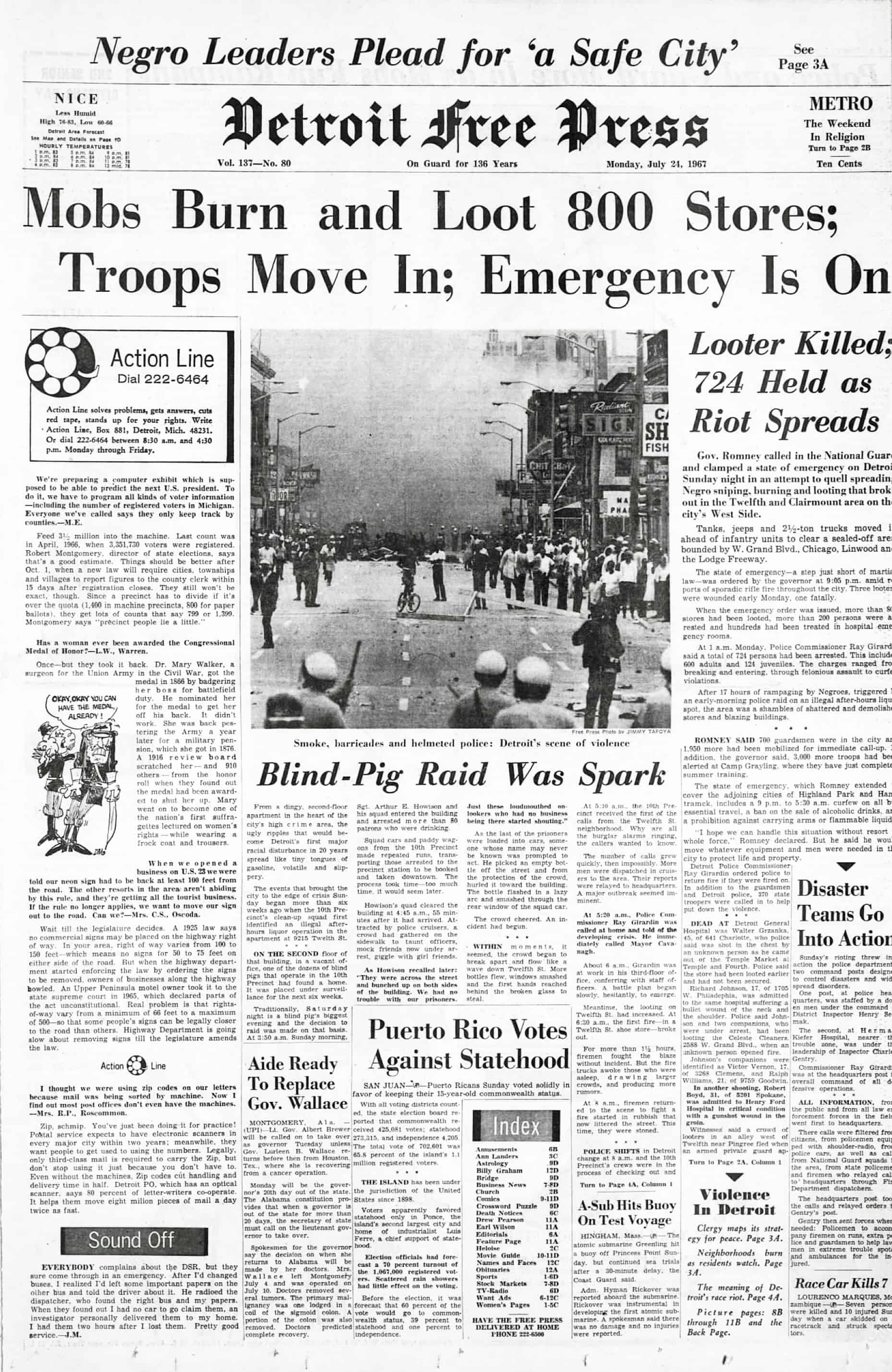
It began with a raid on an unlicensed after hours bar, “a blind pig” in the parlance of that time. 5 days later 43 had died, nearly 1,200 were injured, over 2,000 buildings had burned and more than 7,000 were arrested. It became known as the 1967 12th Street Riot (#Rebellion67 is the hash tag being used on Twitter), at the time the largest riot since the Civil War. It would not be surpassed until 1992 when Los Angeles erupted in the wake of the Rodney King beating.
Units of the Michigan Army National Guard and ultimately the 82nd and 101st Airborne Divisions were deployed to quell the unrest and the reverberations of the event still echo to the present day.
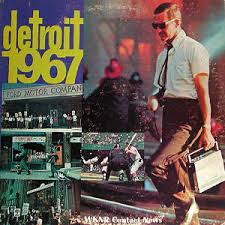 WKNR Contact News provided extensive coverage of the story, which featured prominently in Keener’s annual documentary production, “Detroit 1967“.
News Director Philip Nye deployed WKNR’s 8 man staff throughout the impacted area. “At it’s peak,” he remembered, “the riots spread over fourteen-square miles of the city. A curfew was in effect, a complete ban placed on liquor sales, gasoline can be purchased only during certain hours and never in a container, offices, banks, schools, businesses, industries were closed down; the heart of Detroit was deserted. Deliveries were curtailed. Food ran short. All normal activities in the nation’s fifth-largest city was at a standstill.”
“Police sealed off 12 street hoping to contain the riot. It didn’t work. All available firemen were called to duty, trying to battle the burgeoning number of blazes. It became nearly an impossible task. Time after time they were the targets of bricks and bottles at a fire scene. Later those bricks and bottles became bullets. Like a plague it spread, moving west and northwest across Woodward. It was out of control. At a command post downtown, city officials were joined by Michigan Gov. Romney. State police were called in, the National Guard mobilized and finally federal troops requested… By Thursday, it had run its course. Troops were told that sheathe their bayonets. On Friday the last major fire was reported.”
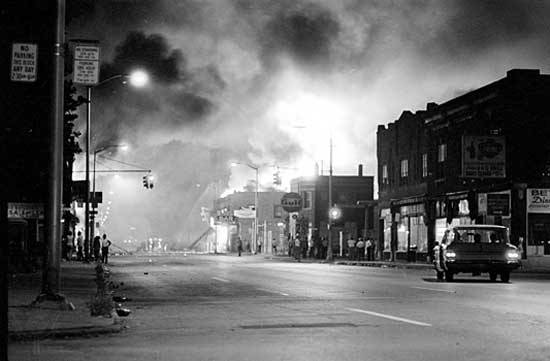
The Detroit Free Press won a 1968 Pulitzer Prize for it’s coverage and many of us who listened to WKNR back in the day remember visceral television images of black smoke curling into the summer sky.
Much was done in the wake of the riot to try and change the environment of anger and distrust. The success of initiatives like “New Detroit” and “Detroit Renaissance” are debated to this day.
In 1994, Detroit’s first African American mayor, Coleman Young, would write, “The heaviest casualty, however, was the city. Detroit’s losses went a hell of a lot deeper than the immediate toll of lives and buildings. The riot put Detroit on the fast track to economic desolation, mugging the city and making off with incalculable value in jobs, earnings taxes, corporate taxes, retail dollars, sales taxes, mortgages, interest, property taxes, development dollars, investment dollars, tourism dollars, and plain damn money. The money was carried out in the pockets of the businesses and the white people who fled as fast as they could. The white exodus from Detroit had been prodigiously steady prior to the riot, totaling twenty-two thousand in 1966, but afterwards it was frantic. In 1967, with less than half the year remaining after the summer explosion—the outward population migration reached sixty-seven thousand. In 1968 the figure hit eighty-thousand, followed by forty-six thousand in 1969.”
The summer of ’67 changed the nation, bringing uncomfortable realities to the forefront of our consciousness and changing the course of our dialogue about race, poverty and the American Dream forever.
Link – Listen to Detroit ‘ 67, the WKNR Contact News documentary about the year.
Link – Read Jim Feliciano’s excellent essay about the 12th Street Riot and WKNR’s coverage at the Motor City Radio Flashbacks website.
 Michigan Radio’s Stateside program is tweeting the events of #Rebellion67 in real time on twitter. Follow @StatesideRadio for the stream.
Keener13.com Turns 15!
 In June of 2002, Steve Schram and Scott Westerman were doing what they loved best: Staying up late and listening to WKNR airchecks. It was a habit that began when they first met at Michigan State University in the ’70s, but, as individuals their love for Keener had taken root a decade earlier, on that October evening in 1963 when WKMH took on new call letters and a new format.
They didn’t know it then, but WKNR and the people who worked there, would set the standard for every future step in their professional careers. “How would Keener have done it,” became the question they would ask themselves as their own broadcasting adventures took shape. And now, as the clock passed 2AM, one of them, neither can remember which, came up with the idea of a creating website celebrating their favorite Detroit radio station.
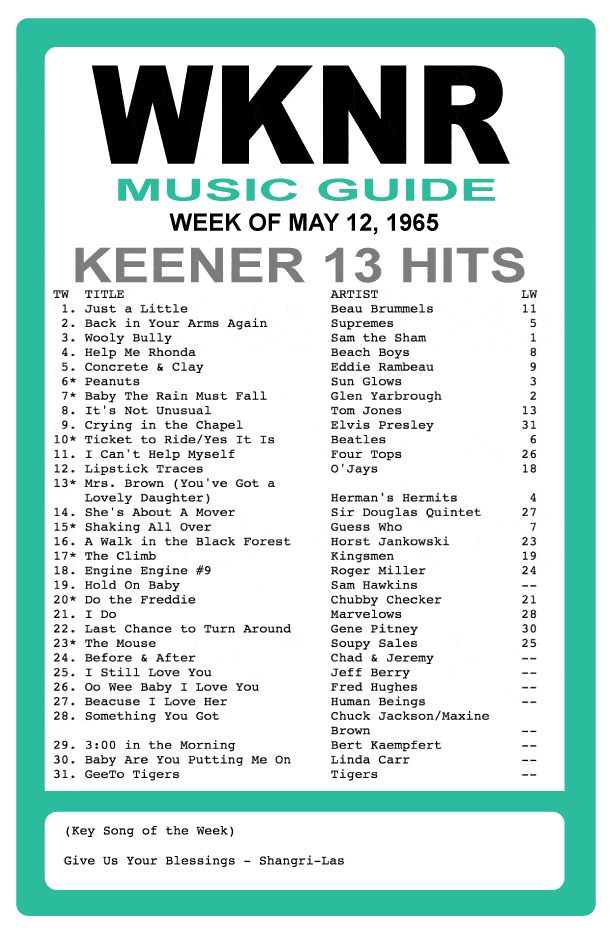 It didn’t take long to pull together the beginnings of what would become the largest collection of Keener memorabilia in existence. And on July 1, Keener13.com launched.
Since then, virtually every significant personality heard on WKNR has contributed something to the collection. The aircheck archive has been a source for researchers studying Detroit’s 60s history as Keener reflected it. Keener13.com has been referenced in television documentaries and in Andru Reeve’s famous, Turn Me On Dead Man – The Beatles and Paul McCartney Death Hoax. We’ve amassed a nearly complete collection of every WKNR Music Guide. There’s the “Inside Keener” library of weekly staff memos that chronicled the comings and goings. And the Keener photo gallery is filled with the famous faces we associated with the voices we knew so well.
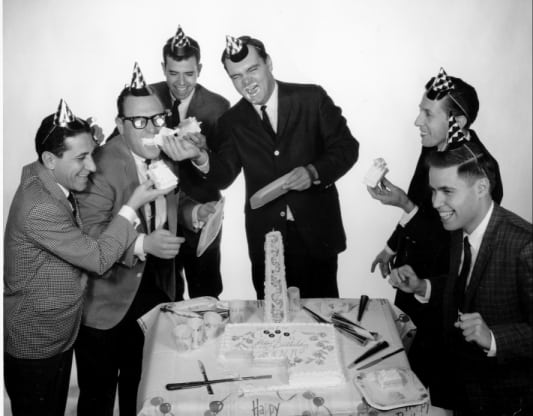 This website has spawned a number of celebratory events. For two summers, we were honored to produce special broadcasts on Keeners 1310 Khz frequency during the Woodward Dream Cruise. A collectable series of Keener Podcasts were created. Keener personalities were honored celebrities in a series of Detroit Radio Reunions over the years. And in the summer of 2014, we were proud to participate in a reunion of many of the original Keener Keymen in New York City.
Along the way, Steve and Scott have occasionally taken to this space to mark key events in the lives of the Keener generation. We’ve said goodbye to some who have left us too soon, remembered moments in popular culture that shaped our attitudes about the world around us and shared the backstory on some of the personalities that are indelibly connected to the soundtrack of our lives.
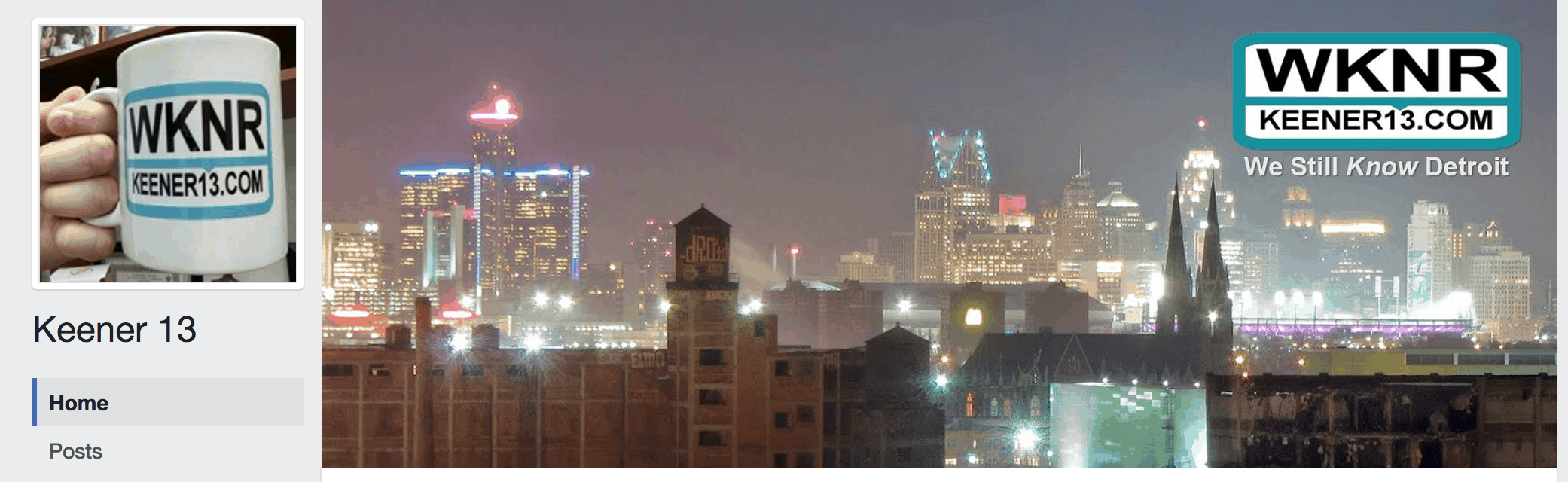 6 years ago, Keener13.com surpassed the lifetime of WKNR itself. We marked that event by launching the Keener Facebook Group and entering into the world of social media that would have been a significant, audience participation dimension of the station’s personality, had it existed back in the day.
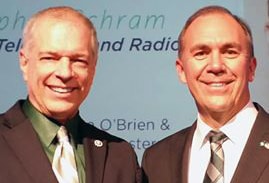
The Keener13.com project has been a labor of love, a reminder of how radio, at it’s best, could connect with an audience in an affirming, life changing way. A common statement made by everyone we’ve talked to who was connected with WKNR was that it was a defining moment in their lives. We share that sentiment.
And at every turn, we have been grateful for the essential contributions of people like you, folks who were touched by the Keener Magic and were willing to share your stories with us.
Thank you, for a decade and a half of great memories, and for making every season, Keener season!
