
Cider and Donuts in Metro Detroit
Fresh cider, warm donuts and orchards across Oakland, Macomb, Wayne, Washtenaw, Livingston and Genesee counties. Click a name to visit the mill's website, or a card to find it on the map.
Hours are for the 2026 fall season and many mills shorten hours or close after October 31. Please check each mill's website before you go. Map pins are approximate; use the directions link for exact routing.
WKNR: 80 Years of Service
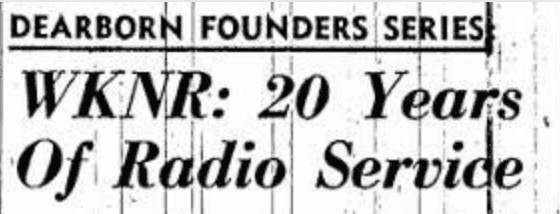
On December 29. 1946, Keener’s predecessor, WKMH debuted. In 1966, The Detroit News reported a Dearborn Founders’ Day celebration of Keener’s 20 years of service. It’s a fascinating history of the station we still celebrate today. Thanks to Kim Sulek for sending us the original article, transcribed below. Continue reading “WKNR: 80 Years of Service”
Remembering Bob Green
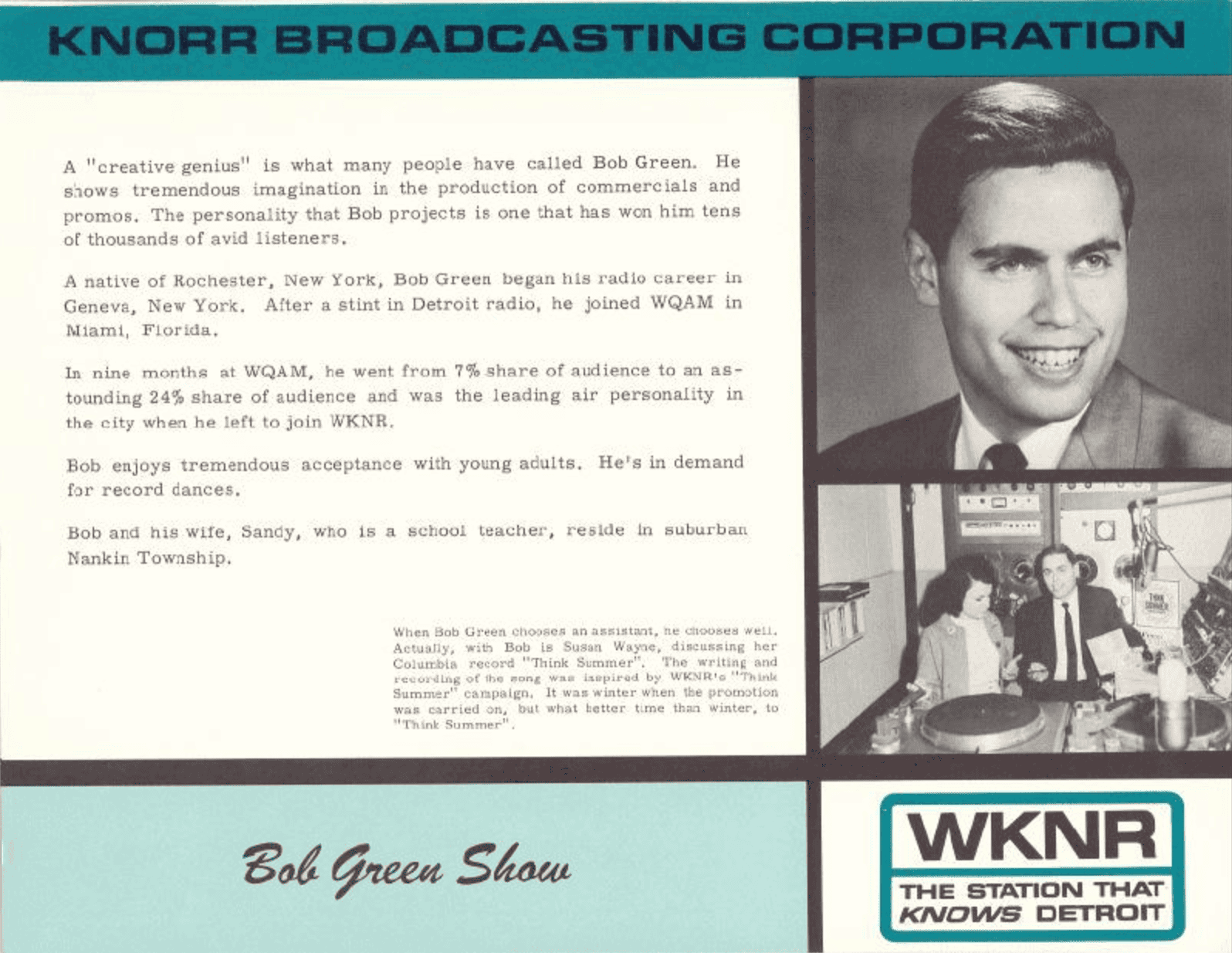
The events that come to define us are rarely the result of careful planning. They are often the unexpected dividends of serendipity. For Bob Green, the path to the Detroit broadcasting began not in a radio control room, but in the frustrating confines of Antoinette Hondelink’s high-school math class. Robert Greenstone possessed an architect’s eye for structure and a desire to wrestle glass, steel, and stone into a symphonic whole.
But geometry proved to be the barrier between Bob and the world of Frank Lloyd Wright. Stymied by cosines and vectors, he found his fascination drifting toward the ether, specifically, technology that could translate the human voice into iron particles arranged neatly along the Mylar of a neighbor’s Webcor tape recorder.
The Hot 100’s Great Purge: Inside Billboard’s War on the Zombie Hit
The charts were stagnant. The hits wouldn’t die. So Billboard finally called the bouncer.
 I bet one thing many of us DJs have in common is running the control board for Casey Kasem’s American Top 40. Based for most of its run on the Billboard Hot 100, the program was a weekend go-to for those who followed the trajectory of American popular music like us Detroit Tiger fans followed Al Kaline’s batting average.
For the better part of the 21st century, the Hot 100 has felt less like a snapshot of the zeitgeist and more like a hostage situation. The chart was once designed with the ruthless efficiency of a shark tank: songs swam up, feasted, and were swiftly devoured by the next big thing. But lately? The shark tank has turned into a nursing home. Songs aren’t just lingering; they’re taking up permanent residence, clinging to the upper atmosphere with the tenacity of a tenant who changed the locks on the landlord. Continue reading “The Hot 100’s Great Purge: Inside Billboard’s War on the Zombie Hit”
Mark Volman (1947–2025): A Requiem in Technicolor
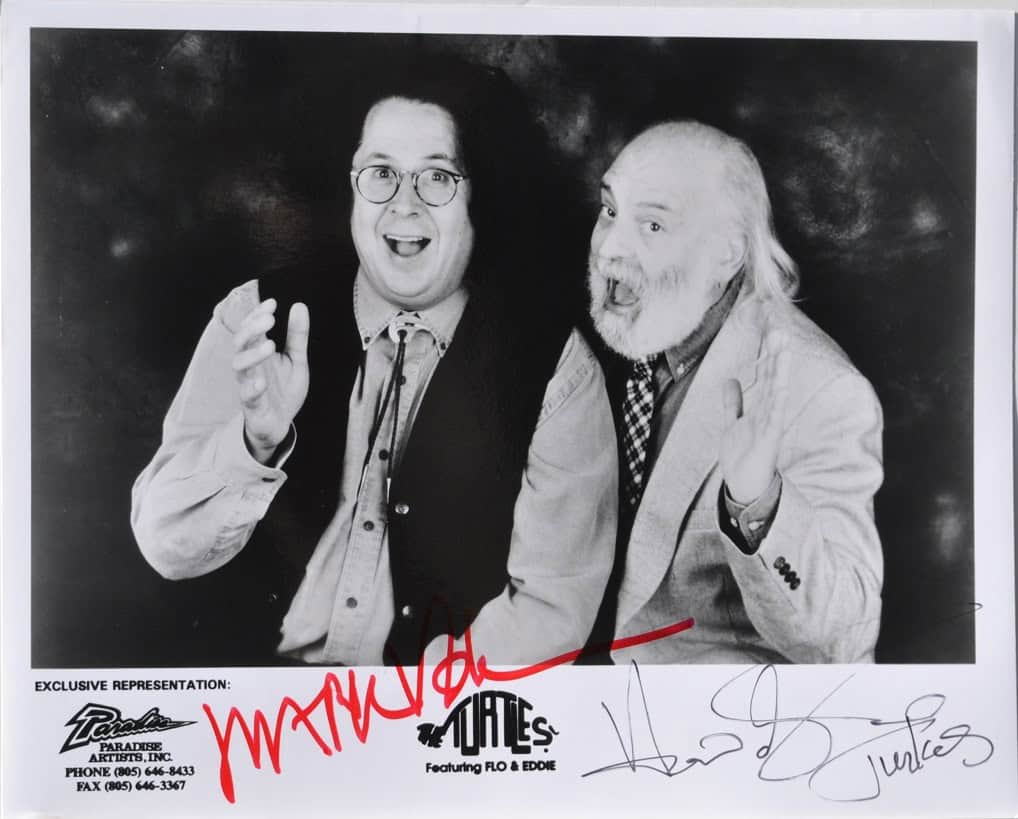
Mark Volman, the curly-haired frontman of The Turtles, breathed his last in Nashville after a brief, unexpected illness. He was 78 years old. Continue reading “Mark Volman (1947–2025): A Requiem in Technicolor”
The Classic
 Fred Jacobs announced he has Parkinson’s in the same way he’s announced everything of consequence across a long, inventive career: plainly, without preamble, no tease for a later reveal after five minutes of spots for sports betting apps or cryptocurrency. It was Fred at his best, direct, unvarnished, and unwilling to pretend that candor requires theatrics. The news landed with the familiarity of a mentor once again pointing to the heart of the matter: here’s what you need to know, here’s what I’m doing about it.
It was the same pedagogy he once used to teach young broadcasters the intricacies of tape and turntables. Here’s a splicing block, a razor blade, and a Moody Blues track, see if you can make it better. A lesson in craft disguised as a challenge in curiosity. Fred, after all, has always been animated by the tension between data and instinct, by the question of how a well-placed song, a novel sequence of sounds, could hold a listener for just a little longer.
He came of age in Detroit at a moment when progressive radio was a messy, fertile experiment, a laboratory disguised as a marketplace. The city was large enough to matter, but still porous enough that a DJ with conviction could elevate a local B-side into national phenomenon. From this improvisational chaos Fred distilled order, birthing the Classic Rock format. Its endurance is proof of his insight: the Super Bowl commercial scored with Led Zeppelin riffs, the teenager who can recite Aerosmith lyrics decades after release, the playlists that still map our cultural memory. Continue reading “The Classic”
The Quiet Orbit of Loni Anderson
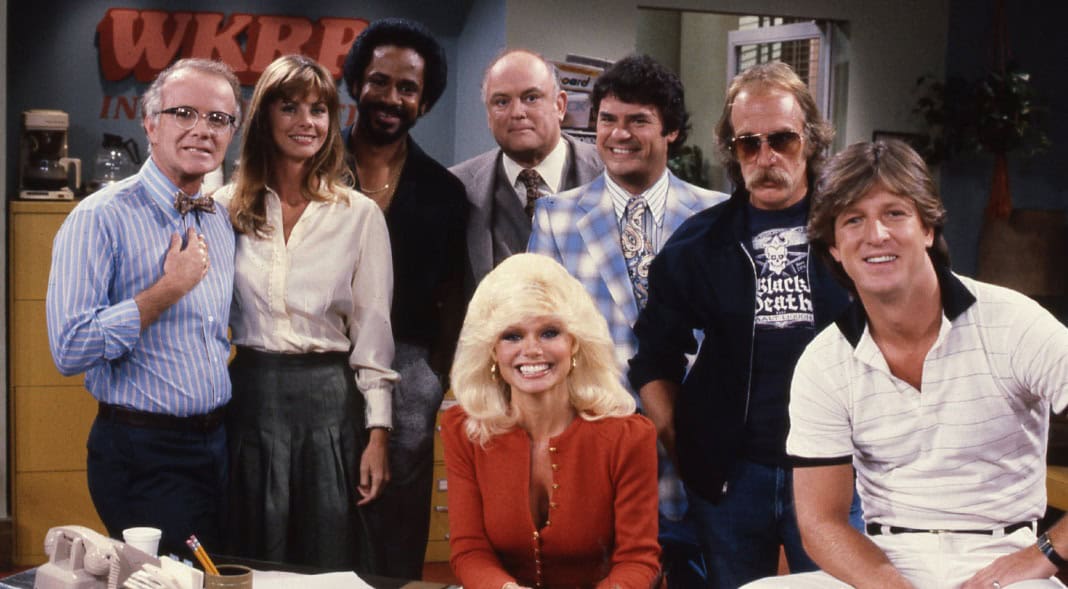 For those of us who grew up addicted to broadcast radio, with its open mics and closed-door politics, “WKRP in Cincinnati” offered both affection and satire. And in that sound booth of a sitcom, no one held the frequency quite like Loni Anderson, who left us this weekend at age 79. As Jennifer Marlowe, the station’s receptionist, gatekeeper, and quiet oracle, Loni brought an impeccable poise to the role, turning what might have been just another dumb blonde into a strategic triumph, a lesson in misdirection, elegance, and the sly power of feminine competence. Continue reading “The Quiet Orbit of Loni Anderson”
Ozzy Osbourne Courted Darkness and Outlived It

By the time we heard of Ozzy Osbourne’s passing at seventy-six, it felt less like the end of a life than the closing of a parable we’d been reading out loud for decades, unsure whether it was tragedy, farce, or miracle. His death on July 22nd was met with the kind of double take that only Ozzy could provoke: not he’s gone, but he wasn’t already? For most of his public existence, Osbourne seemed to teeter in a permanent twilight between collapse and comeback, a man whose biography was written in tabloid headlines and guitar feedback. That he lived as long as he did felt less like good fortune than a cosmic clerical error. Continue reading “Ozzy Osbourne Courted Darkness and Outlived It”
The Unbearable Lightness of Being Ringo
 On the seventh of July, a Monday, amidst the unassuming hum of a world carrying on, Richard Starkey, saw his eighty-fifth year. The name he would later adopt—Ringo Starr—needs, of course, no introduction, yet it is the given name that feels more appropriate for the quietude of the occasion. If the Beatles were a singular, four-headed marvel of the twentieth century, then Ringo was its circulatory system—unshowy, indispensable, and possessed of a swing that was as intuitive as a heartbeat. Continue reading “The Unbearable Lightness of Being Ringo”
AT 40 at 55

On the Fourth of July weekend in 1970, America was still catching its breath from the cultural detonation of the previous decade. A new program came to life on just seven radio stations. “Here we go with the Top 40 hits of the nation this week on American Top 40,” the voice intoned. “The best-selling and most-played songs from the Atlantic to the Pacific, from Canada to Mexico.” It didn’t sound like revolution. It sounded like reassurance. Continue reading “AT 40 at 55”
Bobby Sherman – A Quiet Finale
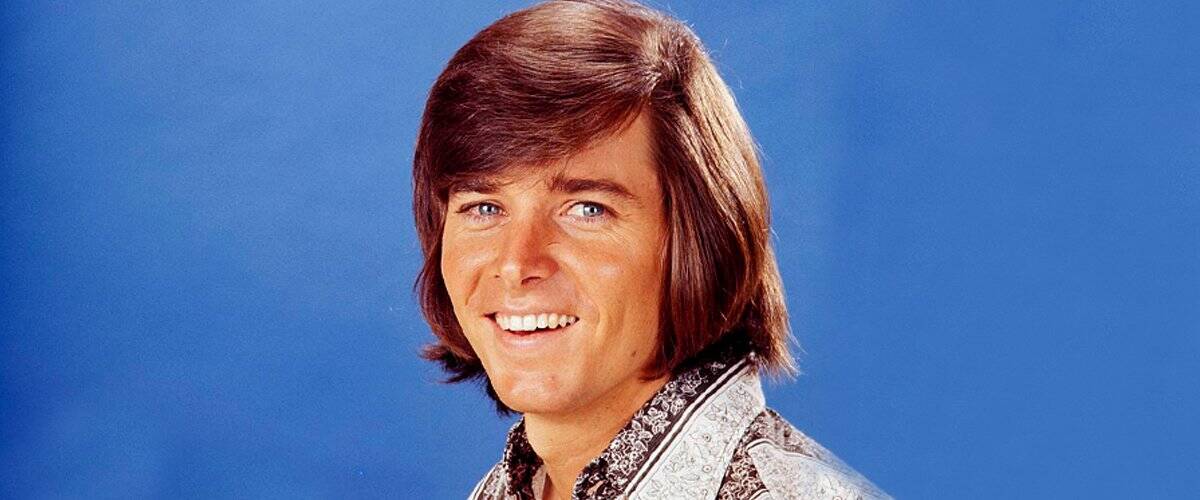
By June 24, 2025, the world had fallen silent—not with the frenzy that once trailed him, but with a gentle stillness. Bobby Sherman, the sweet-faced teen idol of the late 1960s, died at 81, his final days marked by the same modest grace that shaped his life. Continue reading “Bobby Sherman – A Quiet Finale”
Lou Christie – The Voice That Pierced the Sky
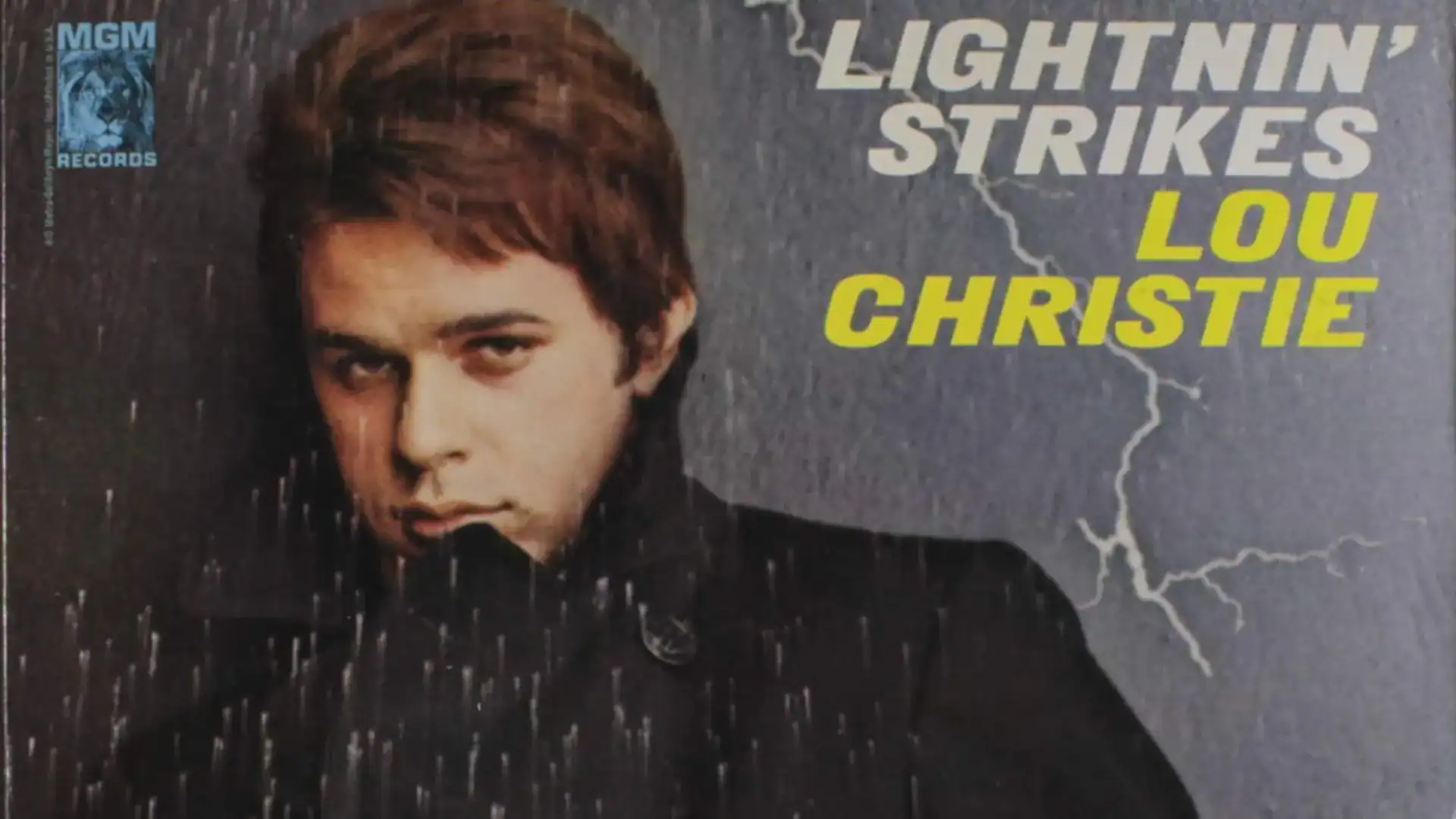 To hear a Lou Christie song on Keener for the first time was to experience something more than sound—a kind of pop exclamation mark hurled through a world of four-part harmonies and teenage platitudes. In a musical landscape dominated by the earnest chin-stroking of folk singers and the tight, syncopated machinery of Detroit’s Motown, Christie’s voice arrived like a lightning strike, cutting clean through the Keener airwaves. It was a helium-soaked, heaven-scraping falsetto that didn’t so much sing as spiral—vertiginous, improbable, and entirely unafraid of absurdity. It sounded less like a young man’s croon than the internal monologue of adolescence itself: dramatic, operatic, always on the verge of a glorious crack-up. Continue reading “Lou Christie – The Voice That Pierced the Sky”
